
 Missing system inertia and frequency resonance destabilization
After new energy (photovoltaic, wind power) replaces the synchronous unit, the system rotational inertia plummeted. A small power perturbation can be triggered by frequency collapse with ± 0.5Hz fluctuations far beyond the ± 0.2Hz safety threshold.
 Low short-circuit capacity and voltage dips collapse
New energy high-penetration areas have reduced short-circuit capacity (SCR<1.5) with weak voltage immunity to disturbances, which is prone to chained voltage instability.
 Insufficient reactive power support and chained off-grid risk
Traditional grid-following equipment passively goes off-grid during grid failures, exacerbating system collapse. Xinjiang wind power bases have experienced large-scale disconnections triggered by voltage dips.
 Unable to self-boot and dependent on main electricity recovery
New energy sources lack self-boot capabilities and rely on external power sources to restore them after a major power outage, which can take hours.
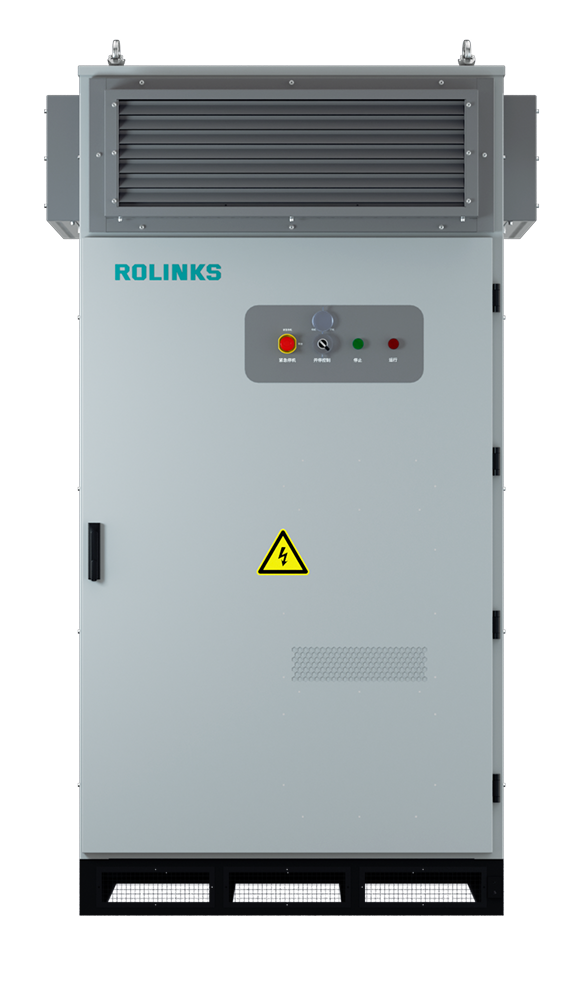
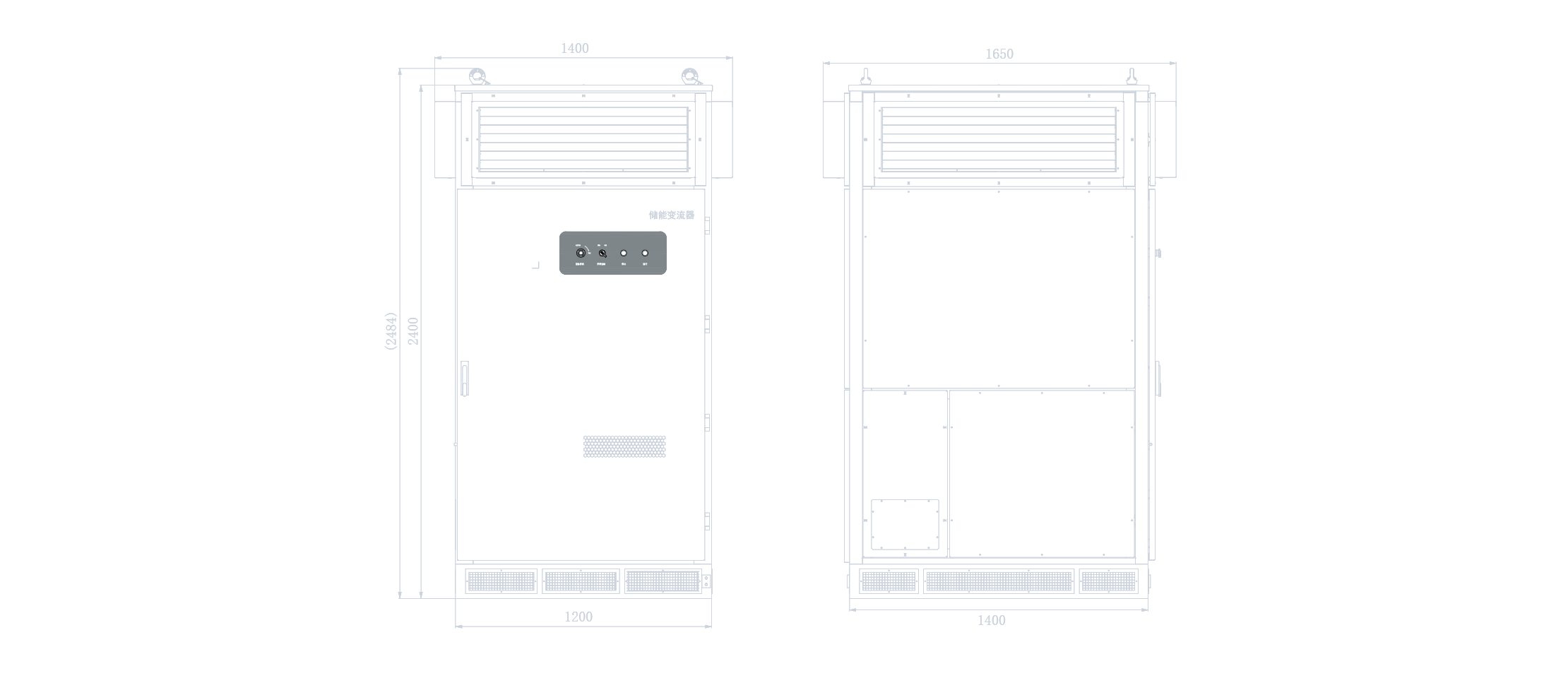
| DC side rating | |||
| Direct current voltage (VDC) | 1050 ~ 1500 V | DC side maximum current | 1833 A |
| DC voltage ripple coefficient | <1% | DC current ripple coefficient | <3% |
| AC side rating | |||
| Rated power | 1750 kW | Maximum output power | 1900 kW |
| Rated grid voltage | 690 V | Allowable grid voltage | 630 ~ 760 V |
| Maximum AC output current | 158 A | Rated grid frequency | 50/60 Hz |
| Allowable grid frequency | 45 ~ 55 Hz / 55 ~ 65 Hz | Total harmonic distortion (THD) | <3% |
| Power factor | >0.99 | Power factor range | 1.0(In advance) ~ 1.0(Backward) |
| AC access method | Three-phase three-wiring system | ||
Power Control System for Grid-Forming Energy Storage (GF-PCS) shall comply with EN61000-6-2,EN61000-6-4,IEC62477,GB/T 34120-2017,GB/T 34133-2017,GB/T 36547-2018,GB/T 36548-2018,SAGC:BESF/RPPS、UL1741 and other standards.
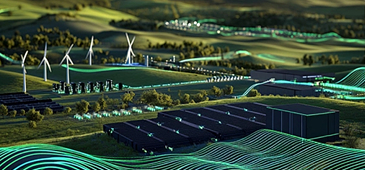
 High percentage of new energy base
Simulating synchronous generator characteristics, providing inertia support and damping control,suppressing broadband oscillations, and enhancing new energy grid-connected stability.
High percentage of new energy base
Simulating synchronous generator characteristics, providing inertia support and damping control,suppressing broadband oscillations, and enhancing new energy grid-connected stability.
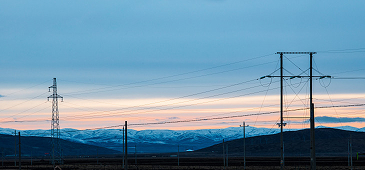 Weak grid and end grid
It provides dynamic reactive power support and enhances voltage regulation.
Weak grid and end grid
It provides dynamic reactive power support and enhances voltage regulation.
 Microgrids and off-grid system
It provides voltage/frequency reference as mains power supply to support islanded operation, optimizes energy scheduling and improves renewable energy utilization.
Microgrids and off-grid system
It provides voltage/frequency reference as mains power supply to support islanded operation, optimizes energy scheduling and improves renewable energy utilization.
 Black start and grid restoration
It gradually establishes a grid reference from a zero-voltage state and supports multi-machine co-starting.
Black start and grid restoration
It gradually establishes a grid reference from a zero-voltage state and supports multi-machine co-starting.
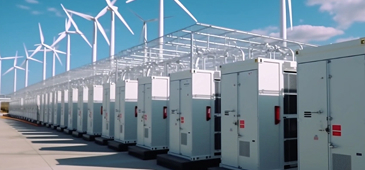 Integrated energy system and shared energy storage
It optimizes energy storage charging and discharging strategies to reduce system operating costs. Combined with virtual synchronous machine (VSG) technology, it enhances the dynamic response capability of the integrated energy system.
Integrated energy system and shared energy storage
It optimizes energy storage charging and discharging strategies to reduce system operating costs. Combined with virtual synchronous machine (VSG) technology, it enhances the dynamic response capability of the integrated energy system.
 Grid foundation models and voltage regulation
Standardized all-round monitoring of electrical fires through fault arc, leakage current and fire temperature monitoring equipment.
Grid foundation models and voltage regulation
Standardized all-round monitoring of electrical fires through fault arc, leakage current and fire temperature monitoring equipment.